
Cost Factors Unique to Miami Demolition Work: A Complete Analysis
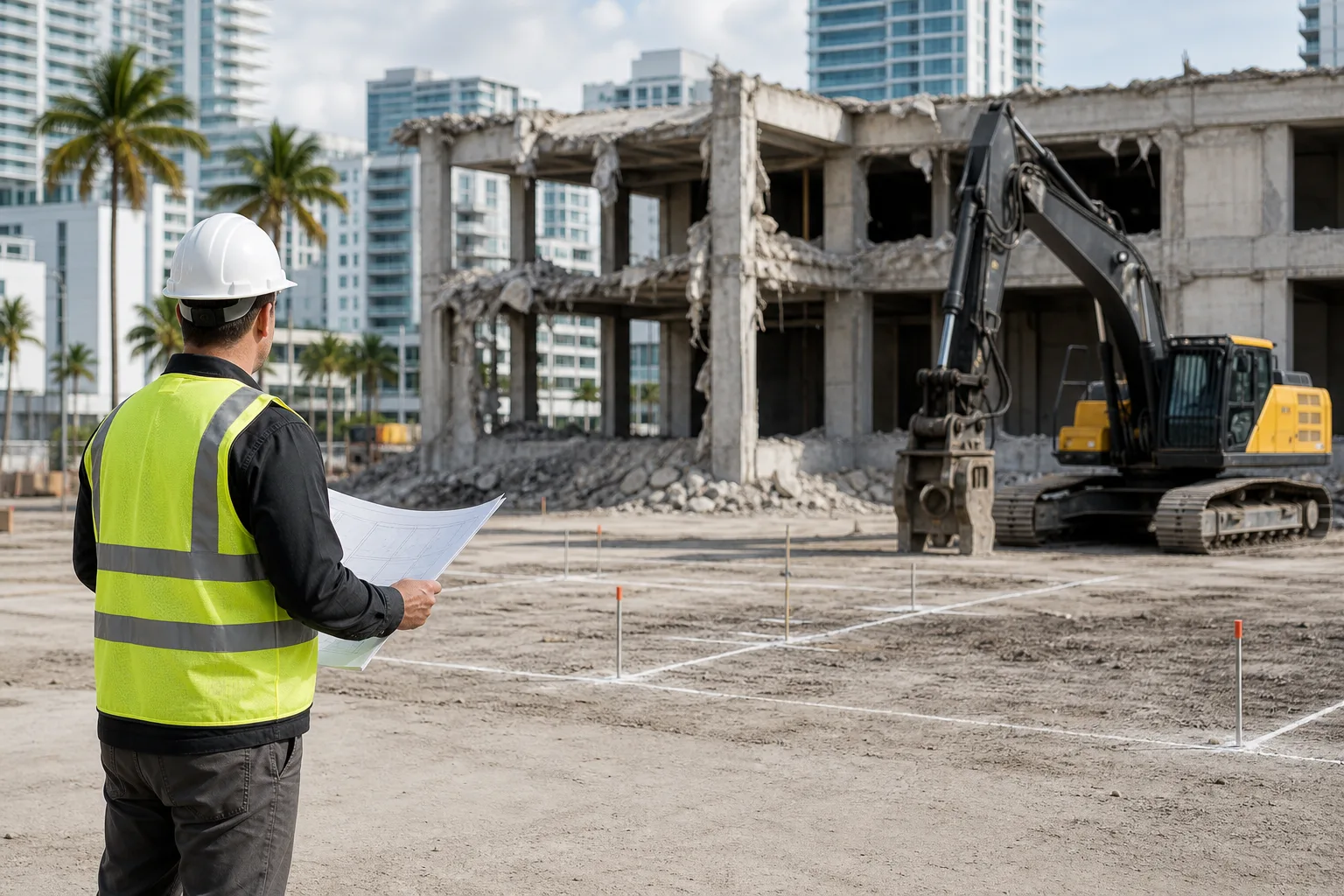
8 Cost Factors Unique to Miami Demolition Work: A Complete Analysis
Demolition in Miami stands apart from other U.S. cities because of its coastal climate, urban density, strict codes, and high redevelopment demand.
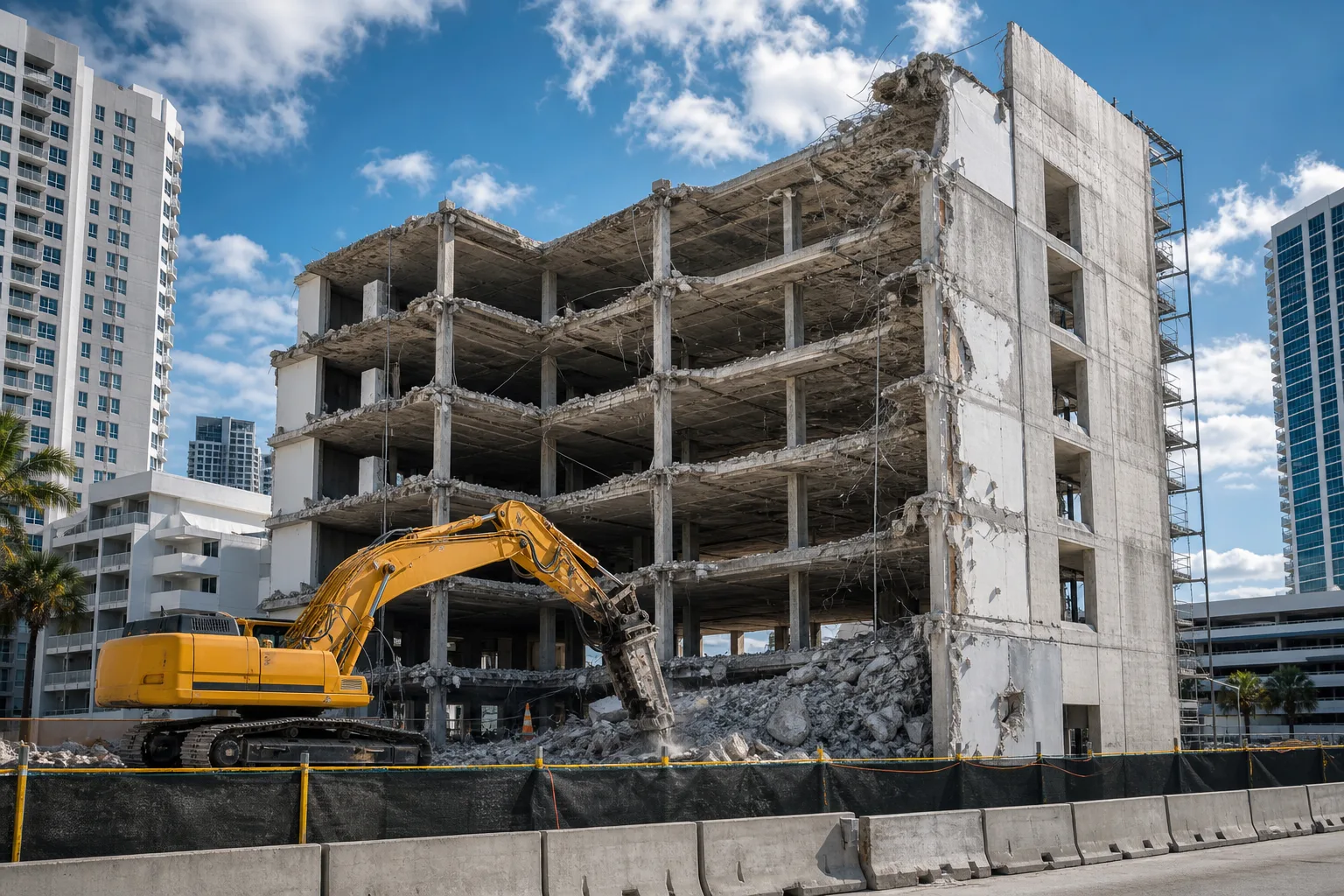
Projects here often face higher costs due to hurricane-resistant materials, complex regulations, and difficult site logistics. Understanding these factors is essential for accurate budgeting and smooth project execution.
8 Major Cost Factors Unique to Miami Demolition
- Structure Size and Complexity
Square footage always drives base pricing, but Miami’s multi-story and hurricane-reinforced buildings add substantial complexity.
Pools, basements, chimneys, and large commercial elements are common features that increase costs.
Reinforced materials make structures more durable against storms but far more challenging to take down, requiring specialized equipment and longer timelines.
- Construction Materials and Age
Most Miami buildings are made of concrete block, stucco, and steel—materials that resist standard demolition techniques.
Removing them is more costly than demolishing traditional wood-frame buildings found elsewhere.
Older properties, especially those built before 1980, often require asbestos and lead paint testing and removal, which can cost anywhere from $15 to $65 per square foot depending on contamination levels.
- Site Accessibility and Urban Logistics
Dense neighborhoods, narrow streets, and limited truck access create logistical challenges that don’t exist in suburban projects.
Demolition teams must often rely on compact equipment, extra manual labor, and off-site debris hauling, all of which add to overall expenses.
- Permits, Regulations, and Compliance
Miami’s permit fees typically range from $100 to $450 but can escalate to as high as $10,000 for historic or landmark properties [1].
Beyond permits, contractors must comply with strict noise ordinances, dust control measures, waste protocols, and traffic management requirements.
These rules extend project timelines and add labor, equipment, and administrative costs.
- Hazardous Material Remediation
Older Miami buildings often contain asbestos, mold, or lead. Testing usually costs between $200 and $800, while abatement can range from $8 to $65 per square foot.
Compliance with EPA and OSHA standards requires containment measures, inspections, and certified labor, all of which increase both cost and project duration.
- Debris Removal and Waste Disposal
Waste management is another significant factor. Landfill tipping fees are higher in Miami, and mandatory recycling adds further complexity.
Transportation in dense areas also raises costs. On average, waste management runs $2 to $8 per square foot for local projects.
- Utility Modifications and Infrastructure
Disconnecting utilities in high-rises or large commercial buildings is more complicated than in standard properties.
Costs generally range from $500 to $5,000, depending on the system’s complexity. Coordination with multiple utility providers also extends timelines and increases administrative overhead.
- Unpredictable Costs: Hidden Structural Issues
Miami’s humid climate contributes to mold growth and foundation issues that aren’t always visible during inspections.
Discovering structural weaknesses mid-project—such as rotted beams or cracked foundations, can add thousands in unexpected expenses. Contingency planning is critical.
Comparative Cost Data: Miami vs. National Average
Residential demolition in Florida averages $6–$15 per square foot, with Miami consistently landing on the higher side at $10–$15.
Commercial and large-scale demolitions can range from $12,000 to $51,000 or more.
Nationally, the average is $4–$10 per square foot, which shows how Miami’s stricter regulations, reinforced construction, and dense neighborhoods drive prices upward.
Value-Driven Strategies for Cost Control
Project stakeholders can manage costs with a few strategies:
- conducting early site assessments to identify hazards and access issues
- hiring contractors experienced with Miami’s regulations
- incorporating recycling or salvage to reduce disposal fees
Scheduling during off-peak periods can also unlock savings on labor and waste management.
FAQs:
1. Why is Miami's average cost per square foot so high?
Miami’s costs are higher because buildings use hurricane-resistant materials, neighborhoods are dense and hard to access, and projects must comply with strict regulations. Specialized techniques and equipment add further expense.
2. What permits are mandatory, and how quickly can they be obtained?
Every demolition requires a permit. In most cases, standard permits take about two to four weeks, while historic properties can require additional approvals that may extend the process to six to twelve weeks.
3. How can builders minimize expensive hidden costs?
The most effective method is conducting comprehensive pre-demolition inspections. Checking for structural weaknesses, mold, asbestos, and foundation issues upfront allows for accurate budgeting and reduces surprises during the project.
4. Are there savings or incentives for green demolition?
Yes. Recycling materials, salvaging items for resale, and using green demolition methods can lower disposal fees and sometimes qualify for environmental incentives or tax benefits.
Miami demolition projects are consistently more expensive than the national average, largely because of hurricane-resistant construction, strict regulations, and urban density challenges.
By understanding these unique cost factors and planning ahead, stakeholders can budget more effectively and avoid delays.
Working with experienced local professionals and implementing smart cost-control strategies ensures successful outcomes in one of the country’s most complex construction markets.
Reference:
- https://www.miamidade.gov/global/economy/building/construction-permitting-procedures.page#:~:text=Construction%20and%20Permitting%20Procedures%20*%20New%20Building,and%20plans%20for%20Zoning%20Improvement%20Permits%20(ZIPs)