
How to Prepare Your Miami Property for Demolition Work
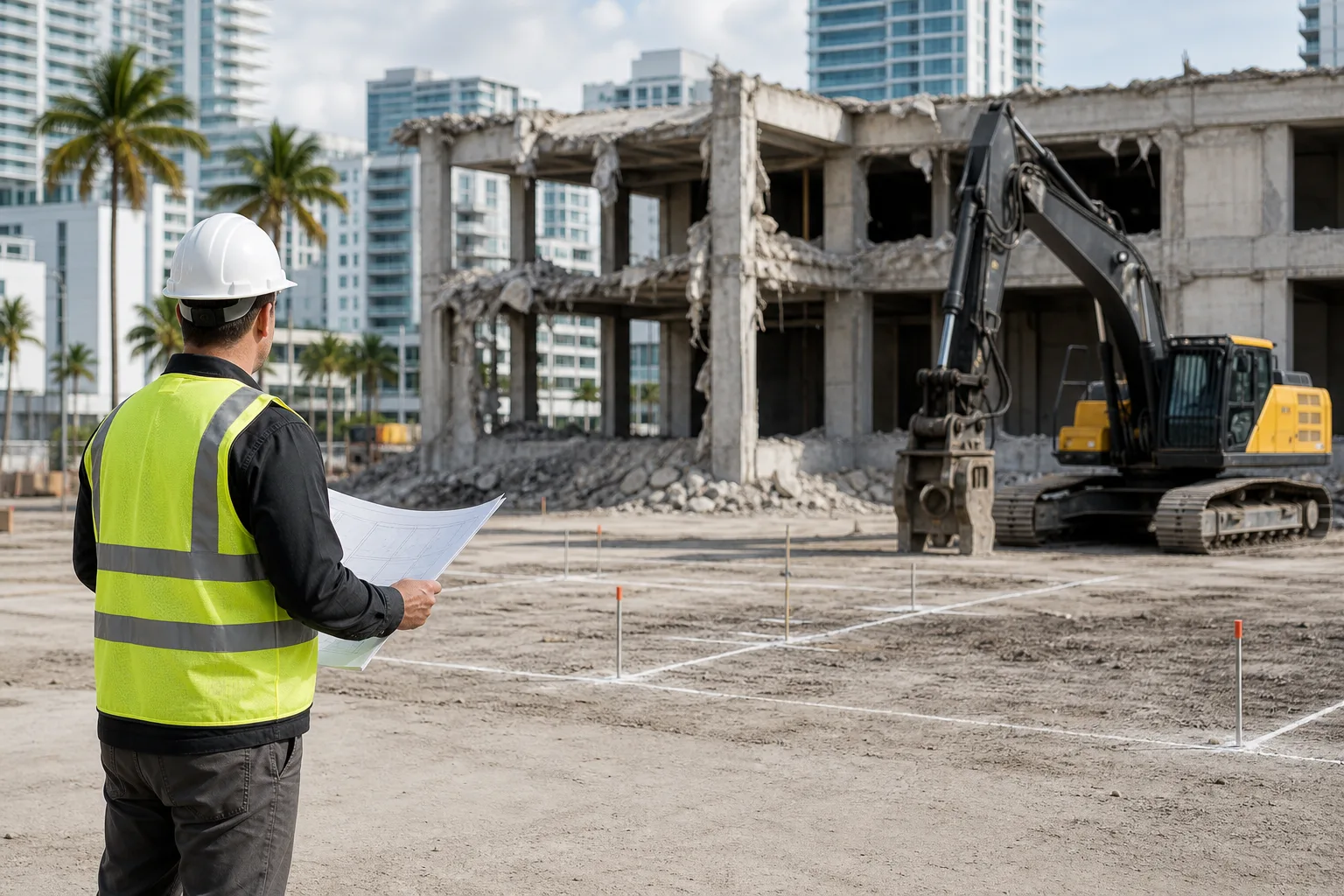
Demolition work is a significant undertaking that requires careful planning and preparation, especially in a densely populated urban area like Miami.
This comprehensive guide outlines the key steps property owners must take before demolition work begins in Miami, addressing local regulations, environmental considerations, and practical aspects of site preparation.
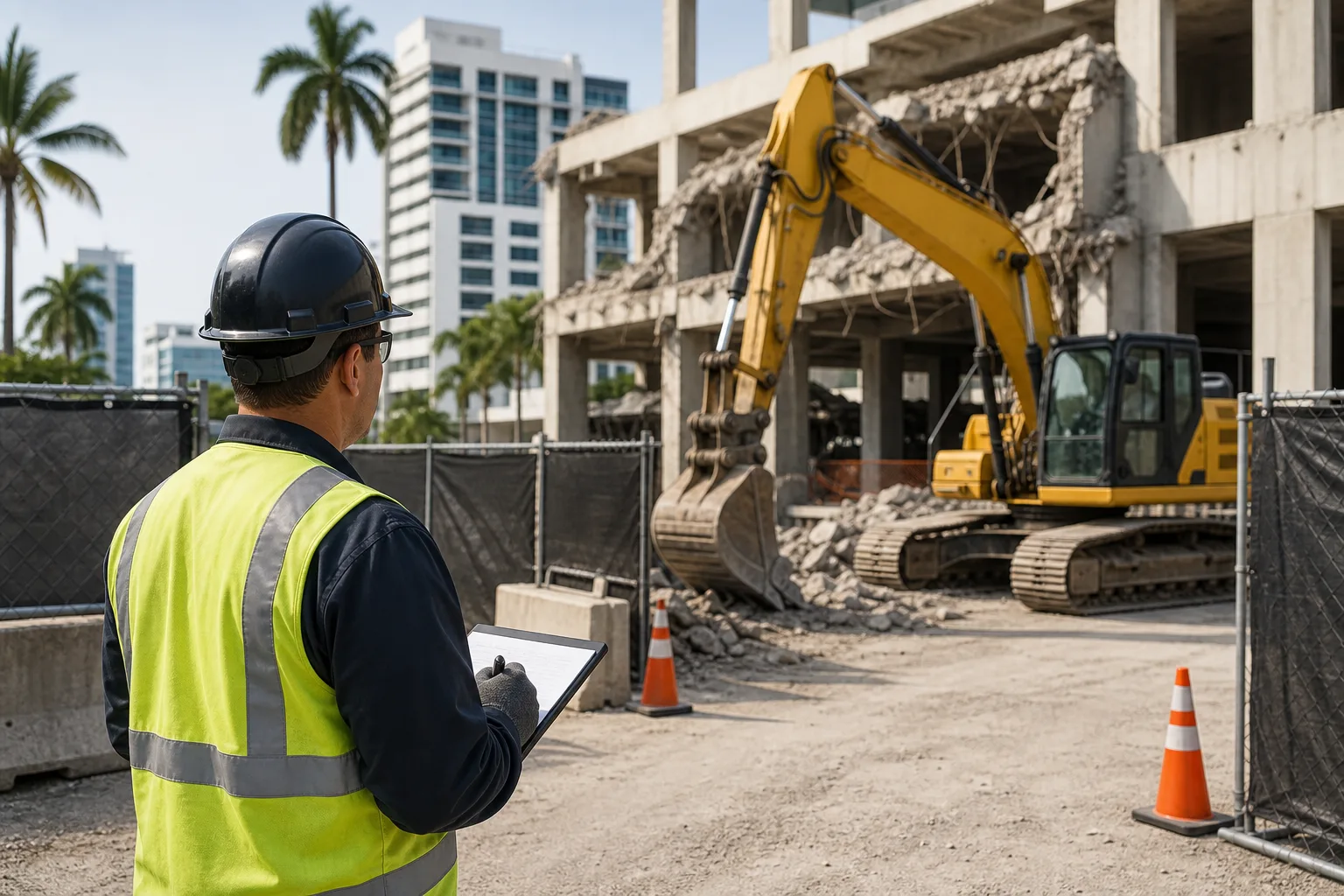
Understanding Miami-Dade County Demolition Regulations
Miami-Dade County has specific regulations governing demolition work to ensure public safety and environmental protection. Before proceeding with any demolition plans, property owners must navigate the local regulatory landscape:
Permit Requirements
The cornerstone of legal demolition work is obtaining the proper permits. In Miami-Dade County, demolition permits are managed through the Department of Regulatory and Economic Resources (RER) [1]. The application process typically requires detailed plans, a site survey, and information about the structure to be demolished. Depending on the property's location, additional permits may be required if the building is in a historic district or coastal zone.
The permit application must include details about waste management, dust control, and noise mitigation. Expect the permitting process to take several weeks, so plan accordingly to avoid project delays. Miami-specific considerations include hurricane season restrictions, which may limit when certain demolition activities can take place.
Zoning Considerations
Miami's zoning codes may impact your demolition plans, particularly if you intend to rebuild a structure that differs from the existing one. Consult with a zoning specialist to understand how current zoning regulations might affect your property's future use after demolition. In some cases, demolition may trigger reassessment of grandfathered uses or structures that no longer conform to current codes.
Professional Property Assessment
Before any physical work begins, a thorough assessment of your property is crucial:
Structural Evaluation
Hire a structural engineer to evaluate the building and develop a safe demolition strategy. This assessment identifies load-bearing elements, potential structural weaknesses, and the best approach for dismantling the building. The engineer can also determine if partial demolition is feasible for renovation projects, potentially saving costs and preserving valuable architectural elements.
Hazardous Materials Survey
Miami's older buildings often contain hazardous materials that require specialized handling during demolition. A comprehensive hazardous materials survey should identify:
- Asbestos in insulation, flooring, ceiling tiles, and other building materials
- Lead-based paint, common in structures built before 1978
- PCBs in electrical equipment and caulking
- Mercury in switches and thermostats
- Mold and biological hazards, particularly prevalent in Miami's humid climate
Florida law requires proper abatement of these materials before general demolition can begin. For asbestos specifically, a licensed asbestos contractor must perform removal, following strict protocols established by the Florida Department of Environmental Protection and the EPA.
Documentation and Insurance
Document the existing condition of your property through photographs and video. This record serves multiple purposes:
- Provides baseline information for insurance claims
- Creates evidence of pre-existing conditions for potential neighbor disputes
- Helps identify salvageable materials
- Assists in planning the demolition sequence
Review your insurance coverage to ensure it adequately protects against risks associated with demolition work. Consider obtaining additional coverage specifically for the demolition project, as standard property insurance may not cover all demolition-related risks.
Utility Disconnections and Site Preparation
Coordinating Utility Disconnections
All utilities must be properly disconnected before demolition begins:
- Electricity: Contact Florida Power & Light (FPL) to disconnect service at the meter and, if necessary, at the main line.
- Gas: Miami-Dade gas service providers require advance notice to cap gas lines safely.
- Water and Sewer: The Miami-Dade Water and Sewer Department handles disconnection requests, which should be scheduled several weeks in advance.
- Telecommunications: Notify all service providers to remove or protect their infrastructure.
For each utility, request written confirmation of disconnection. Keep these documents as proof that utilities were properly terminated, which may be required for final inspections or in case of disputes.
Salvage and Waste Management Planning
Before demolition, determine which materials can be salvaged:
- Architectural elements with historical or aesthetic value
- High-quality fixtures, appliances, and materials
- Recyclable materials like metal, concrete, and wood
Develop a waste management plan that complies with Miami-Dade County waste disposal regulations. The plan should address:
- Sorting and separation of different waste types
- Recycling opportunities to reduce landfill impact
- Proper disposal of non-recyclable materials
- Transportation logistics and requirements
Miami has specific regulations regarding construction and demolition debris. Working with waste management companies familiar with local requirements can simplify compliance and potentially reduce disposal costs through recycling credits.
Environmental and Community Considerations
Environmental Protection Measures
Miami's proximity to sensitive ecosystems requires robust environmental protection during demolition:
- Install silt fencing and erosion control measures to prevent runoff into stormwater systems, which ultimately lead to Biscayne Bay and other waterways.
- Implement dust suppression techniques, such as water spraying, particularly important in Miami's residential neighborhoods.
- Monitor noise levels and adhere to Miami-Dade County noise ordinances, which restrict construction noise during certain hours.
- Protect trees and vegetation that will remain after demolition with barriers and designated no-disturbance zones.
Neighbor Relations and Notifications
Maintaining positive community relations is essential, especially in Miami's densely populated neighborhoods:
- Provide written notice to adjacent property owners about the demolition schedule and potential disruptions.
- Establish a point of contact for neighbors to address concerns.
- Consider hosting an informational meeting for nearby residents to explain the project and address questions.
- Schedule particularly disruptive work during business hours when possible.
- Install privacy screening around the site perimeter to minimize visual impact.
Selecting Qualified Demolition Contractors
Verification of Credentials
Choose contractors with:
- Current Miami-Dade County contractor licenses
- Comprehensive insurance coverage, including liability and workers' compensation
- Experience with similar demolition projects in the Miami area
- Knowledge of local regulations and permitting requirements
- Positive references and reviews from previous clients
FAQs
How long does it take to get demolition permits in Miami?
Typically 3-6 weeks, depending on property location and complexity. Historic districts may require additional review time.
Do I need special permits for demolishing a pool?
Yes. Pool demolitions require specific permits addressing drainage and safety concerns.
Who should disconnect my utilities before demolition?
Licensed professionals must disconnect utilities. Contact FPL for electricity, your gas provider for gas lines, and Miami-Dade Water and Sewer for water connections.
Are there noise restrictions for demolition in Miami?
Yes. Demolition work is generally permitted Monday-Friday from 7am-6pm and Saturday from 8am-5pm. No work on Sundays and holidays.
What happens if asbestos is discovered during demolition?
Work must stop immediately. A licensed asbestos contractor must remove the material following Florida DEP regulations before demolition can resume.
Preparing a Miami property for demolition requires careful planning, regulatory compliance, and attention to environmental and community concerns. By following this comprehensive preparation guide, property owners can ensure their demolition project proceeds safely, efficiently, and in compliance with all local requirements. Proper preparation not only facilitates a smoother demolition process but also lays the groundwork for successful future development on the site.
Reference:
- https://www.miamidade.gov/global/economy/home.page