
Swimming Pool Removal in Miami: What Property Owners Should Know
Miami Pool Removal: Complete Property Owner's Guide
Property owners in Miami contemplating pool removal face complex decisions involving regulatory compliance, environmental protection, structural engineering, and financial implications that require careful planning and professional expertise to navigate successfully.
The city's position at sea level, combined with high water tables, tropical climate, and strict environmental regulations, creates technical challenges that make pool removal more complex than in many other regions.
Understanding these local factors, along with Miami's specific permitting requirements and market conditions, becomes essential for property owners considering pool removal projects.
Reasons for Pool Removal in Miami's Market
Property Value and Land Use Optimization
Miami's rapidly appreciating real estate market often makes pool removal economically attractive when additional living space or lot coverage provides greater value than existing pool amenities. Many properties benefit from converting pool areas to expanded patios, guest houses, accessory dwelling units, or enhanced landscaping that better suits current market preferences.
Aging pools requiring substantial renovations may be candidates for removal when renovation costs exceed the value added to the property. Miami's salt air and intense UV exposure accelerate pool equipment deterioration, sometimes making removal more cost-effective than extensive restoration projects.
Maintenance and Operating Cost Concerns
Miami's year-round swimming season creates continuous pool maintenance requirements that generate substantial ongoing costs for chemicals, equipment, energy, and professional services. Pool removal eliminates these perpetual expenses while freeing property owners from ongoing maintenance responsibilities and liability concerns.
Hurricane season presents annual challenges including equipment protection, water chemistry management during power outages, and potential damage from wind-borne debris. Pool removal eliminates these seasonal concerns while reducing property insurance costs and hurricane preparation requirements.
Safety and Liability Issues
Swimming pools represent significant liability exposure through drowning risks, slip and fall accidents, and equipment-related injuries. Miami's high population density and frequent social gatherings increase these risks while expanding potential liability exposure.
Insurance costs for properties with pools include higher premiums and potential coverage limitations. Pool removal can significantly reduce insurance costs while eliminating coverage gaps that might exist for older pools or equipment that doesn't meet current safety standards.
Miami's Unique Environmental and Regulatory Challenges
High Water Table and Drainage Considerations
Miami's proximity to sea level and high groundwater levels create unique challenges for pool removal that require specialized techniques and equipment. Traditional pool removal methods may be inadequate when groundwater intrusion affects excavation stability and backfill procedures.
Hydrostatic pressure from groundwater can cause removed pools to "float" if proper drainage and pressure relief systems aren't installed during backfill operations. This phenomenon requires engineering solutions including permanent drainage systems, pressure relief valves, or specialized backfill materials.
Soil Conditions and Environmental Requirements
Miami's sandy soils and limestone substrate create unique excavation and backfill challenges. Sandy soils require proper compaction techniques and materials to prevent settling that could affect nearby structures or surface improvements.
Miami's coastal location requires compliance with strict regulations protecting water quality and marine ecosystems. Pool removal projects must demonstrate compliance with stormwater management requirements and prevent contamination of groundwater or surface water resources.
Pool Removal Methods and Techniques
Complete Removal vs. Partial Fill-In
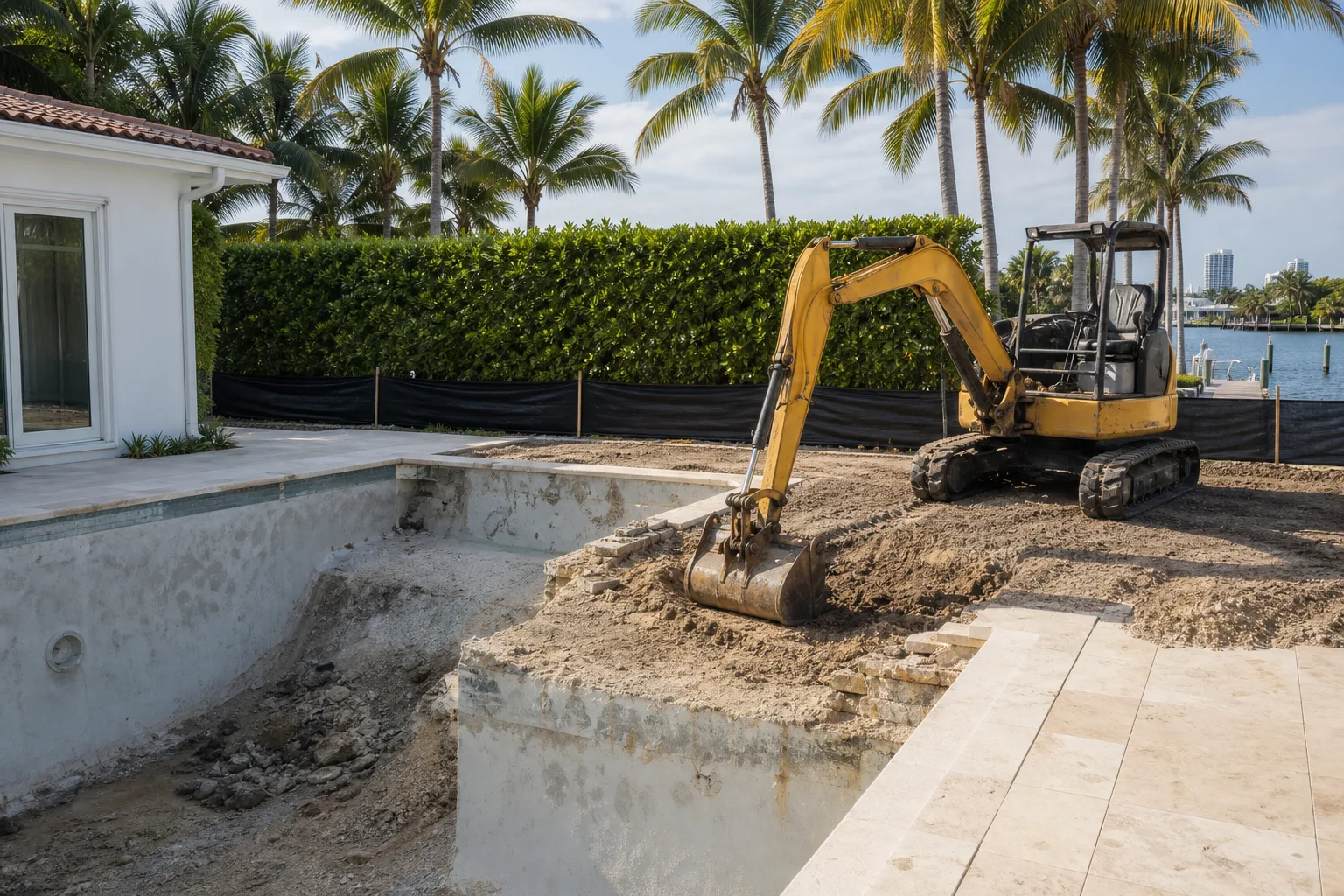
- Complete removal involves excavating and removing all pool materials including concrete shells, plumbing systems, and equipment installations. This approach provides maximum flexibility for future land use while eliminating potential structural or drainage problems.
- Partial fill-in approaches leave pool shells in place while removing equipment and filling the structure with appropriate materials. This method costs less initially but may limit future construction options and can create drainage or stability problems.
Miami's high water table and environmental regulations often favor complete removal for long-term property value and regulatory compliance.
Specialized Equipment Requirements
Miami pool removal requires equipment capable of working in high water table conditions while managing sandy soils and potential rock encounters. Specialized excavation equipment including track-mounted excavators with dewatering capabilities provides better performance than standard construction equipment.
Dewatering systems must handle continuous groundwater intrusion while maintaining stable working conditions and ensuring compliance with water discharge regulations.
Regulatory Requirements and Permitting Process
Miami Building Code Compliance
Miami building codes include specific requirements for pool removal that address structural safety, drainage, and environmental protection concerns. Permit applications typically require detailed plans showing removal methodology, backfill specifications, drainage systems, and restoration plans [1].
Professional engineering may be required for projects affecting neighboring structures or involving complex drainage considerations. Inspection requirements include multiple checkpoints during removal and backfill operations.
Environmental and Water Management Permits
Environmental permits may be required for projects that affect stormwater drainage, wetlands, or water quality protection areas. Water management district permits may be necessary for projects that alter drainage patterns or affect regional water management systems.
Discharge permits for dewatering operations ensure compliance with water quality protection requirements while allowing necessary construction activities.
Cost Factors and Financial Considerations
Project Cost Variables
Pool removal costs in Miami vary significantly based on pool size, construction type, site conditions, and removal method selected. Complete removal typically costs more initially but may provide better long-term value through increased land use flexibility.
Site access affects equipment requirements and labor productivity, with limited access requiring smaller equipment and manual labor that increase project costs. Disposal costs depend on material type, contamination issues, and available disposal facilities.
Hidden Costs and Complications
- Utility relocation when pool removal affects existing electrical, plumbing, or gas systems
- Soil contamination from pool chemicals requiring remediation
- Structural damage to nearby improvements during removal operations
- Environmental testing to identify potential contamination problems
Return on Investment Analysis
Property value impacts depend on neighborhood characteristics, target market preferences, and alternative land uses implemented after removal. Cost savings from eliminated pool maintenance, insurance, and utility expenses provide ongoing financial benefits that should be factored into investment calculations.
Selecting Professional Services
Contractor Qualifications
Pool removal contractors in Miami should demonstrate specific experience with local soil conditions, water table challenges, and regulatory requirements. Verify licensing status, insurance coverage, and bonding requirements before engaging contractors.
References from recent Miami-area projects provide insight into contractor performance and problem-solving capabilities, particularly valuable due to Miami's unique environmental challenges.
Engineering and Environmental Consulting
Professional engineering services may be required for complex removal projects involving structural concerns, drainage problems, or regulatory compliance issues. Environmental consulting services help navigate permit requirements while ensuring compliance with environmental protection regulations.
Surveying and testing services provide accurate site information that supports project planning and regulatory compliance.
References:
- https://www.miami.gov/My-Government/Departments/Code-Compliance